Corrosion risk must be considered carefully during chemical cleaning. A few months after completion of a combined-cycle power plant, the plant was forced to shut down because of operational instability and pressure loss in the steam generator.
Inspection and Laboratory Findings
A detailed inspection identified multiple leaks on the evaporator tube side and an unusual yellow deposit in the bottom header. Tube samples were sent to a laboratory to determine the metal morphology, surface chemistry, and composition of the deposit.
- X-ray spectroscopy indicated significant carbon enrichment together with bonded oxygen and ferrous ions, suggesting the presence of organic compounds.
- X-ray diffraction showed that much of the carbon and oxygen was present in an aliphatic structure, indicating citrate compounds and explaining the yellow appearance.
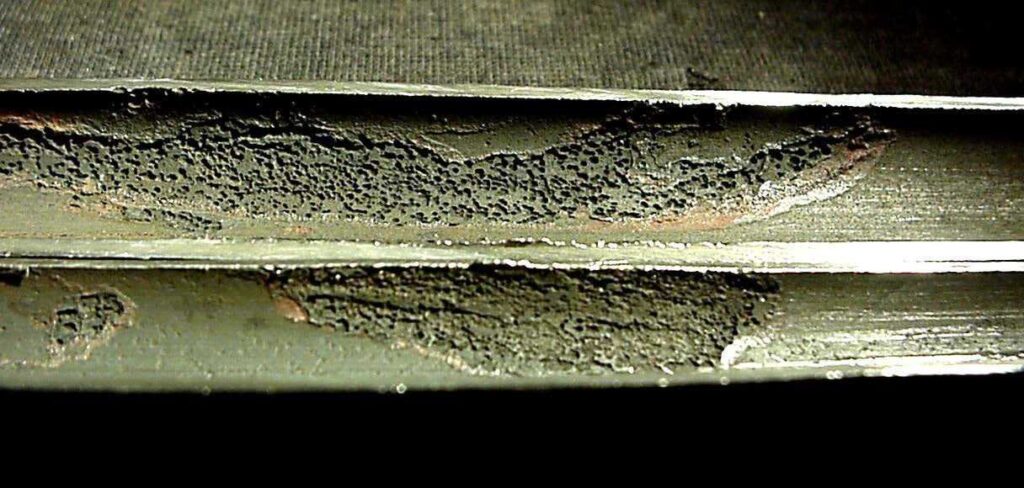
- Microscopy revealed an acid-corrosion pattern characterized by a jagged, rough surface, undercut pinholes, and general pitting.
Cleaning Failure
During pre-commissioning, the boiler was cleaned using a conventional single-phase citric-acid process.
During acid pickling, citric acid reacts with iron oxides to form ferrous citrate. This precipitates as a solid salt and must be removed during the subsequent rinsing stages.
In this case, the system was not rinsed effectively after chemical cleaning. A large quantity of deposits with a high ferrous-citrate content remained in the evaporator.
Root Cause
The ferrous citrate, together with residual water, created under-deposit corrosion cells and localized low-pH conditions. These conditions caused the corrosion damage shown in the featured image.