Forensic Engineering

Failure in Multimedia Filters

Failure in Multimedia Filters

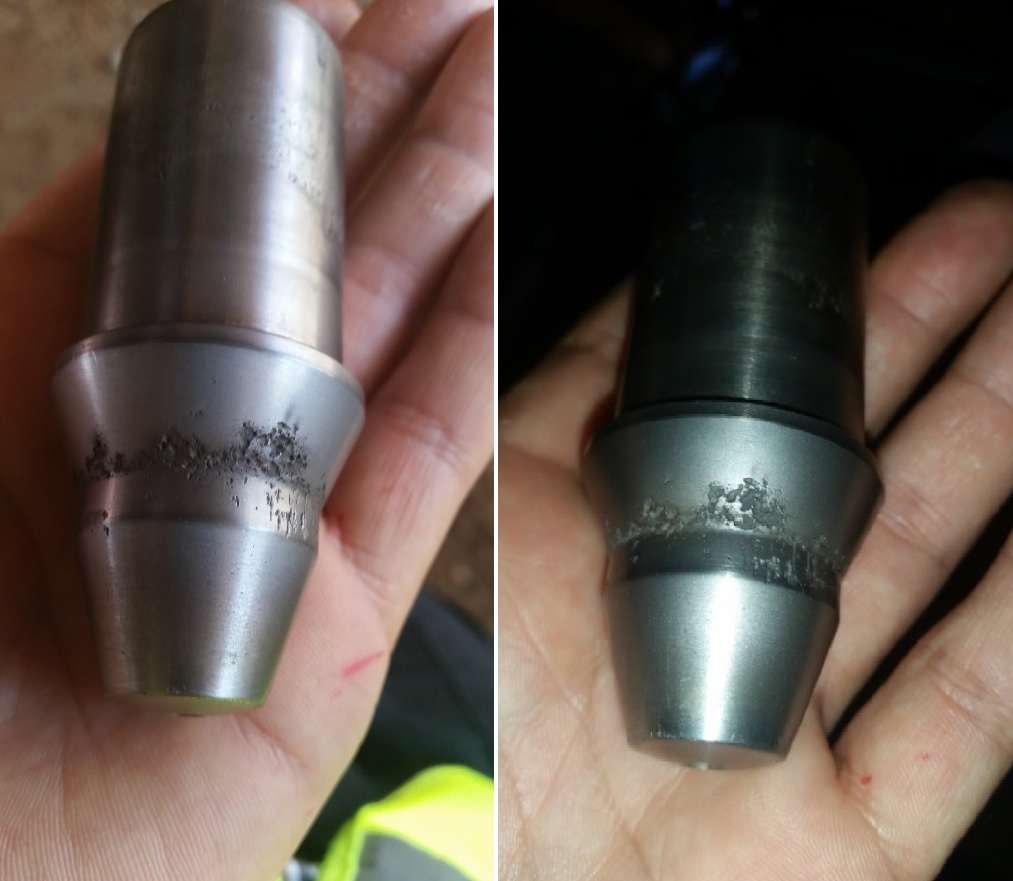
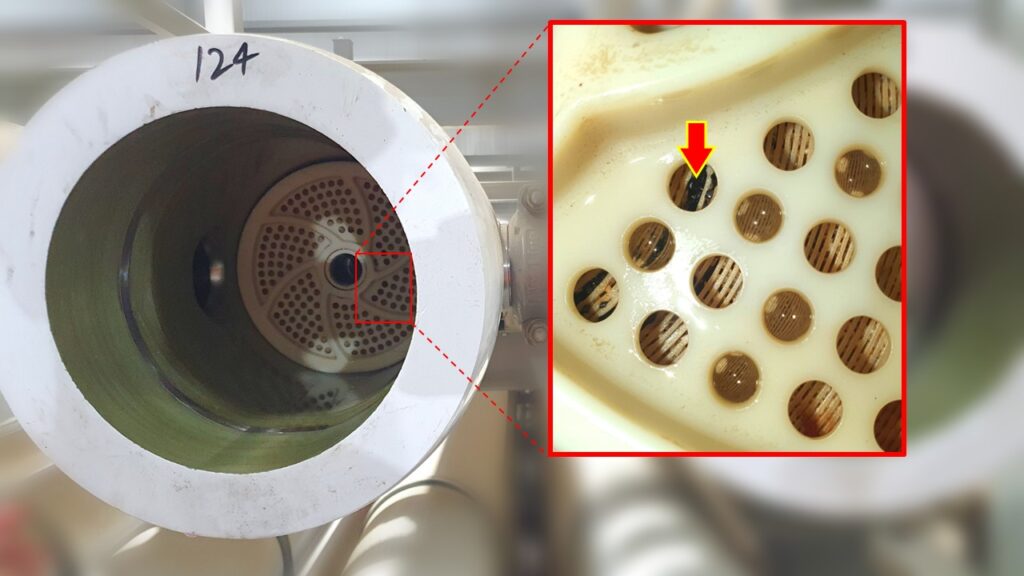
This case shows how a small defect in a multimedia filter caused major downstream consequences, compromised the integrity of reverse osmosis membranes, and demonstrated the importance of a robust, reliable design. What Was Observed The featured image was taken at the inlet of a reverse osmosis (RO) pressure vessel. It shows the multi-orifice protection cover

Failure in Multimedia Filters Read More »
A Few Corrections To Avoid Hideout Effects

A Few Corrections to Avoid Hideout Effects

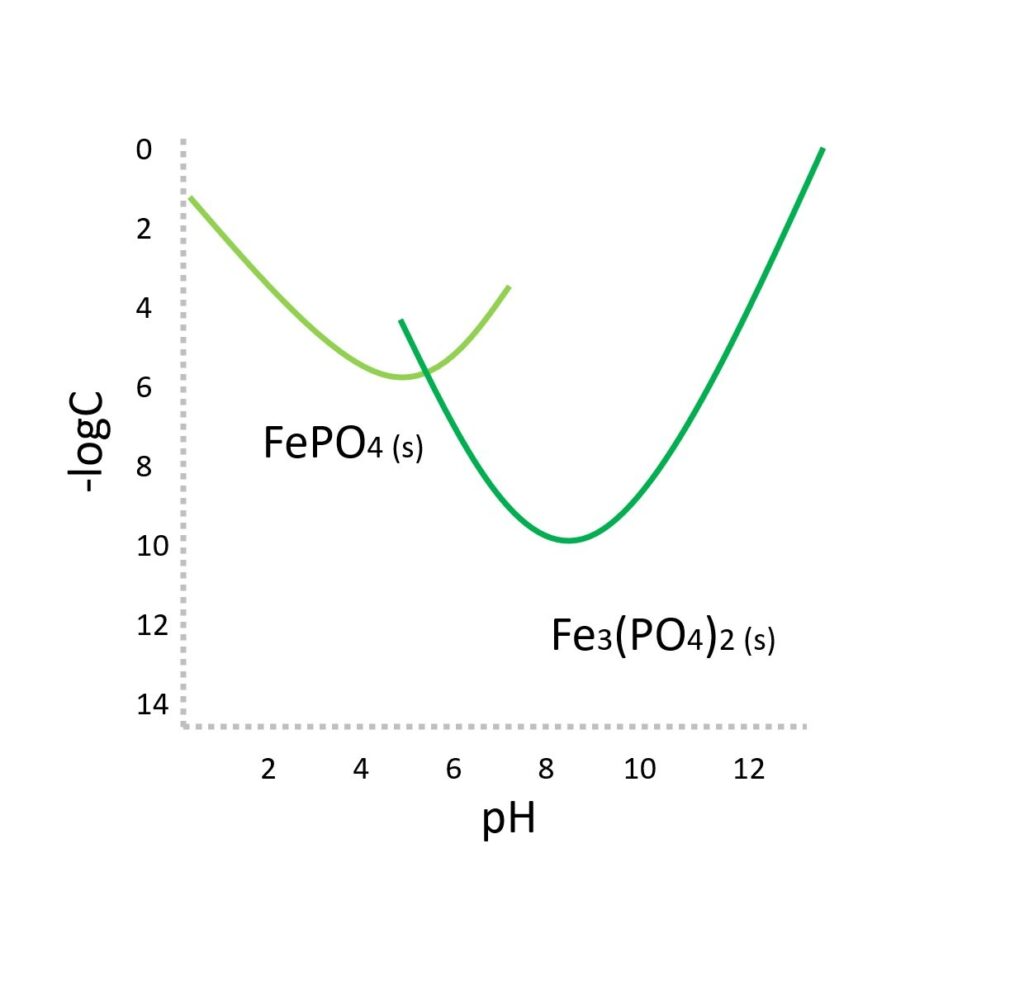
Scaling is a form of fouling commonly found in heat exchangers, steam generators, and cooling systems. It occurs when dissolved chemical species interact and precipitate as inorganic salts. How Phosphate Hideout Develops Calcium- and sodium-based compounds are among the most common scale-forming species. Their solubility depends on temperature and pH and can change significantly as

A Few Corrections to Avoid Hideout Effects Read More »

Cooling Towers Blowdown Systems

Cooling Tower Blowdown Systems

Cooling towers reject heat through the partial evaporation of circulating water. This evaporation rapidly concentrates the chemical species naturally dissolved in the water. Scale Formation The principal scale found in cooling towers is calcium carbonate, which forms from the decomposition of calcium bicarbonate. Other deposits may contain magnesium-, sodium-, or silica-bearing compounds. Their solubility depends

Cooling Tower Blowdown Systems Read More »

Chemical Corrosion Damage in Adiabatic Expansions

Chemical Corrosion Damage in Adiabatic Expansions

A sudden change in a flow passage—typically an increase in cross-sectional area—can cause water pressure to fall rapidly below the saturation pressure at its temperature, producing instantaneous vaporization. Expansion and Flashing Because the process is approximately adiabatic, there is no external heat exchange and total enthalpy remains essentially constant. Part of the liquid flashes into

Chemical Corrosion Damage in Adiabatic Expansions Read More »

Flash Steam Problems

Flash Steam Problems

Flash steam forms when hot water or condensate undergoes a sudden pressure reduction below its saturation pressure, causing part of the liquid to vaporize immediately. How Flashing Causes Damage The expansion is approximately isenthalpic: part of the liquid’s sensible heat supplies the latent heat needed to form steam. The resulting two-phase flow contains vapor and

Flash Steam Problems Read More »

Sulphur Dew-Point Corrosion

Sulfur Dew-Point Corrosion

Material selection must balance design cost with the required operating performance. Commissioning introduces demanding transient conditions that can be more severe than normal operation and may exceed the design conditions of in-line equipment. Commissioning Risk Commissioning strategies should therefore be reviewed in advance to identify equipment that may experience critical conditions and to ensure that

Sulfur Dew-Point Corrosion Read More »

FAC Corrosion

FAC Corrosion

FAC Corrosion When a steel surface is in contact with water under specific chemical and thermodynamic conditions, an oxide protective layer of magnetite (Fe3O4) is developed. Controlling the growth mechanism, the morphology and the solubility of such corrosion product it is possible to minimize the risk of failure and extend the life-time of the plant.

FAC Corrosion Read More »

Short-Term Overheating

Short-Term Overheating

Short-Term Overheating Commissioning is likely the most critical stage in the life time of a power plant due to the transient conditions which boilers are subjected to. From the first ramp-up to normal operation, the plant is exposed to a variety of transitory conditions, thermal expansions cycles, chemical excursion and equipment adjustments that potentially increase

Short-Term Overheating Read More »

Scroll to Top