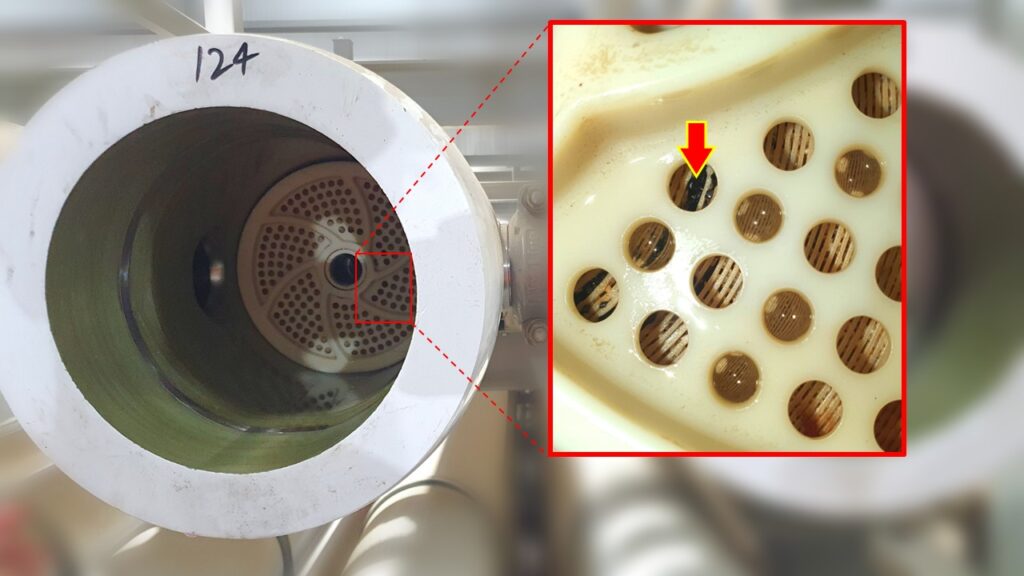
Scaling is a form of fouling commonly found in heat exchangers, steam generators, and cooling systems. It occurs when dissolved chemical species interact and precipitate as inorganic salts.
How Phosphate Hideout Develops
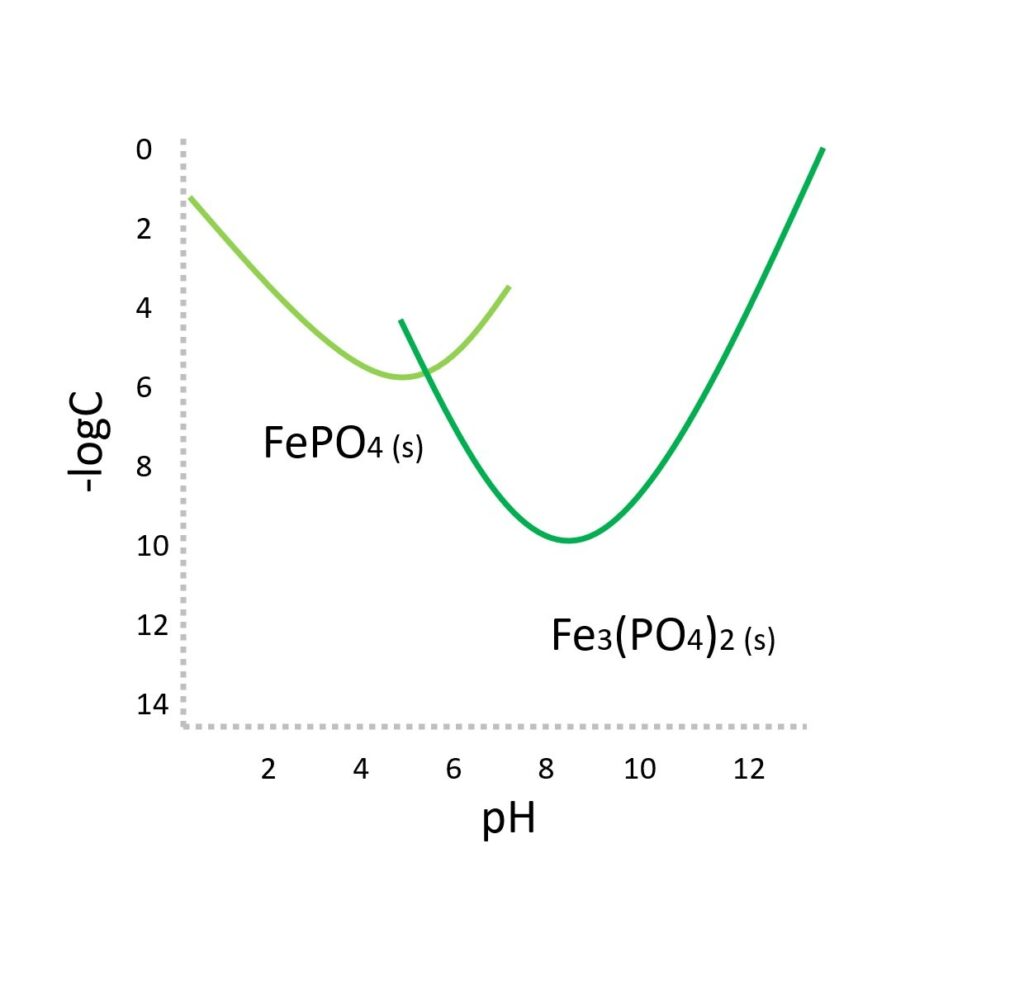
Calcium- and sodium-based compounds are among the most common scale-forming species. Their solubility depends on temperature and pH and can change significantly as operating conditions vary. Under transient conditions, some compounds pass through regions of low solubility and produce hideout effects.
We observed this behavior at a power plant during daily start-up. Phosphate hideout occurs when sodium phosphate reacts with iron oxides and the reaction products have low solubility at high operating loads and heat fluxes. Salt precipitation then occurs. At lower loads and heat fluxes, these precipitates can hydrolyze and return to solution. If the mechanism is not identified correctly, phosphate deposits can cause increased pressure drop, resistance to heat transfer, and erosion-corrosion.
Corrective Actions
We resolved the problem by applying the following measures:
- Adjusted the chemical treatment program. We first dosed a mixture of trisodium and disodium phosphate to reduce sodium input and minimize the risk of carryover. A trisodium-phosphate-only approach was also tested to control possible acid attack, but the chemical equilibrium was difficult to maintain. Given the process conditions, we selected all-volatile treatment.
- Optimized system hydraulics. Improving fluid velocity and flow distribution reduced the likelihood of deposition. The hydraulic analysis also allowed us to map areas with a high probability of scale accumulation.
- Improved mixing. Swirl devices were installed to increase turbulence and improve chemical mixing during dosing. Several dosing points were also moved to more suitable locations.
- Matched the chemistry to the operating temperature. The solubility and reactivity of chemical compounds are governed primarily by temperature, so the selected treatment chemistry must remain suitable throughout the operating range.
- Upgraded materials in critical areas. Material selection is fundamental to passive protection and corrosion resistance. Components exposed to severe corrosion were replaced with higher-grade steels and Stellite-coated parts.