Forensic Engineering

Back-End Corrosion

Back-End Corrosion

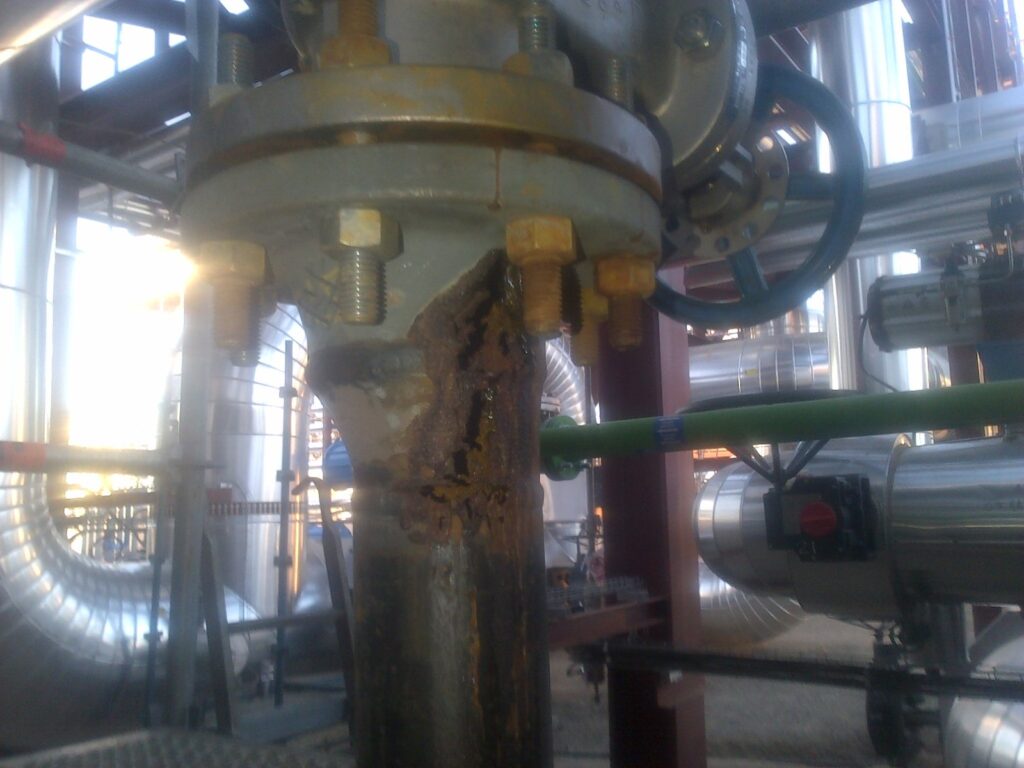
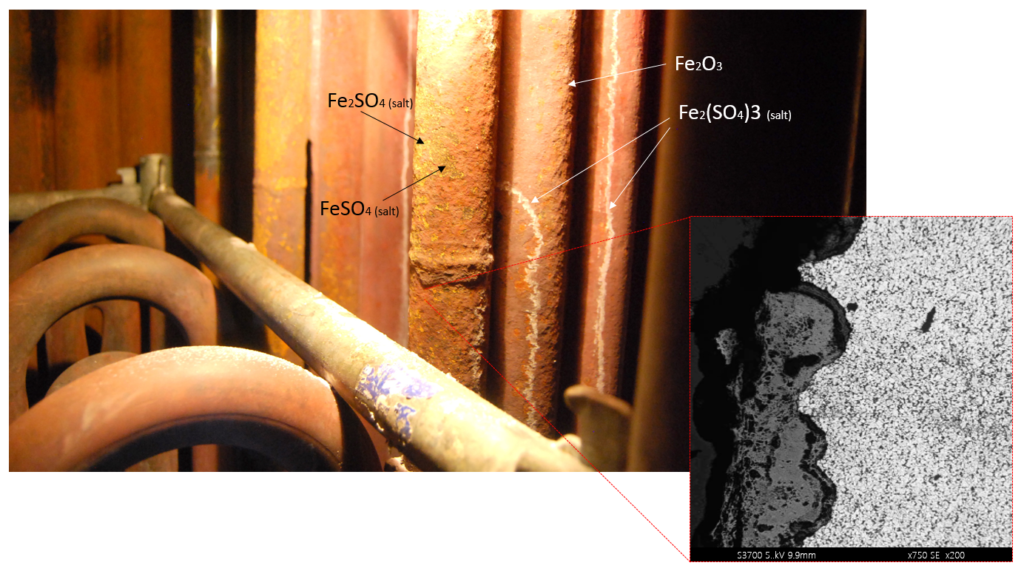
Back-End Corrosion Background When sulphur is present in natural gas, the average content is generally around 0.01% and it comes in the form of hydrogen sulfide. Problem Even in small quantities, sulfides will react with atomic oxygen in the flame zone of the combustion chamber to be converted to sulphur dioxide and subsequently oxidized to

Back-End Corrosion Read More »
erosion corrosion

Erosion-Corrosion

Erosion-Corrosion Introduction Erosion degradation on the outside of cold reheat tubes are due to mechanical action, frequently by impingement of wet steam and/or high-velocity flow. Impingement can be controlled by placing baffle plate tray protections upstream the heat exchanger module; high velocity flow can be handled by oversizing inlet nozzle diameter. However, the effects depicted

Erosion-Corrosion Read More »

molten salt corrosion

Molten Salt Corrosion

Molten Salt Corrosion General Considerations Molten salts, commonly used as heat transfer fluids in solar power plants, are essentially eutectic mixtures of sodium-potassium nitrates and the nature of these bonds provides strong ionic conditions and good chemical stability of the thermal solution against metal corrosion. However, they are very hygroscopic and highly reactive with water

Molten Salt Corrosion Read More »

Intergranular Corrosion

Intergranular Corrosion

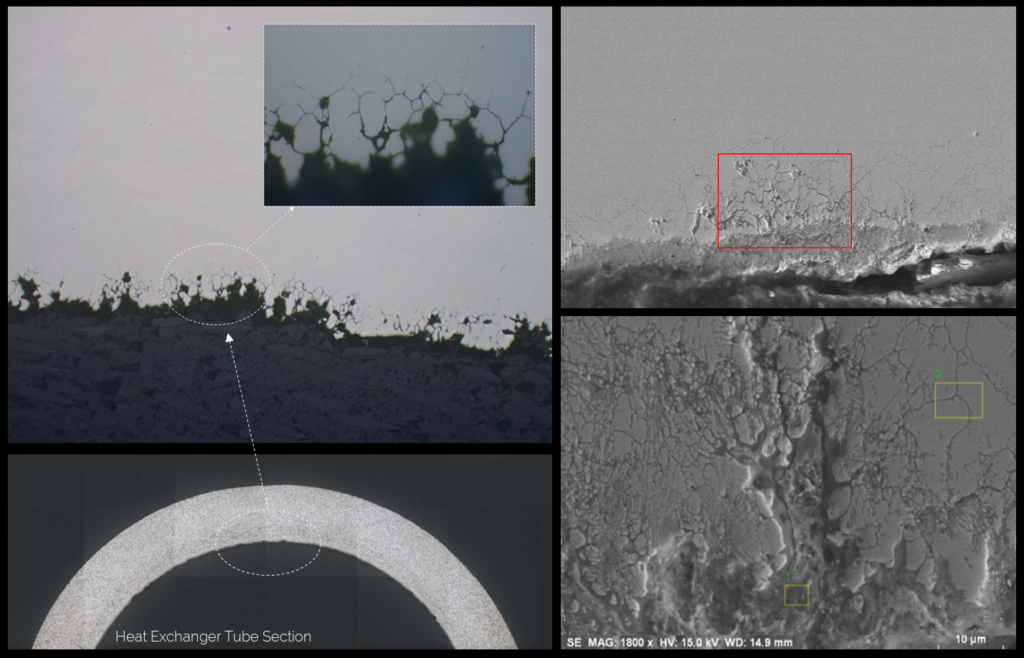
Intergranular Corrosion Background Austenitic Stainless Steels present corrosion resistance ability due to high chromium (Cr) content. Chromium naturally forms a thin, adherent and very protective passive oxide layer when exposed into corrosive aqueous environment which is primarily the reason of its high resistance capabilities. When austenitic stainless is exposed to a corrosive aqueous environment, chromium

Intergranular Corrosion Read More »

Scroll to Top