steam

A Few Corrections To Avoid Hideout Effects

A Few Corrections to Avoid Hideout Effects

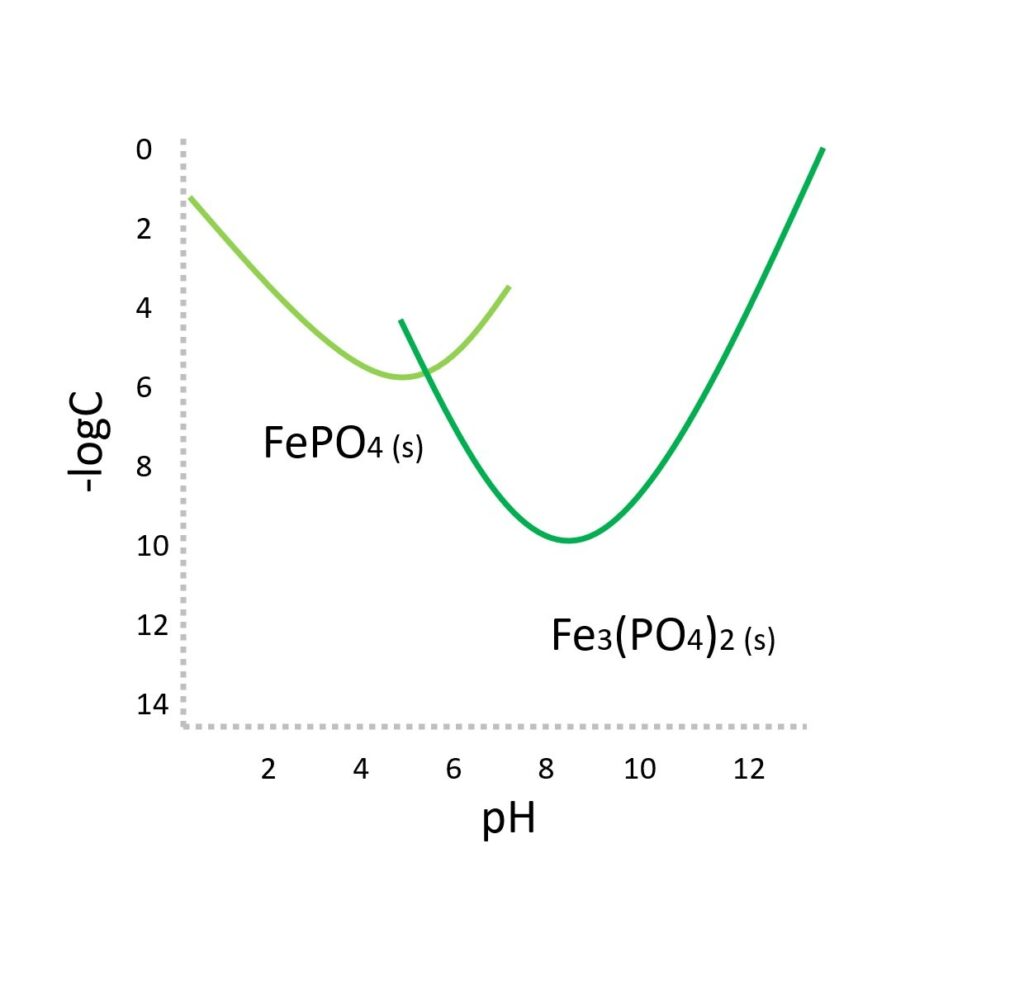
Scaling is a form of fouling commonly found in heat exchangers, steam generators, and cooling systems. It occurs when dissolved chemical species interact and precipitate as inorganic salts. How Phosphate Hideout Develops Calcium- and sodium-based compounds are among the most common scale-forming species. Their solubility depends on temperature and pH and can change significantly as

A Few Corrections to Avoid Hideout Effects Read More »
Cooling Towers Blowdown Systems

Cooling Tower Blowdown Systems

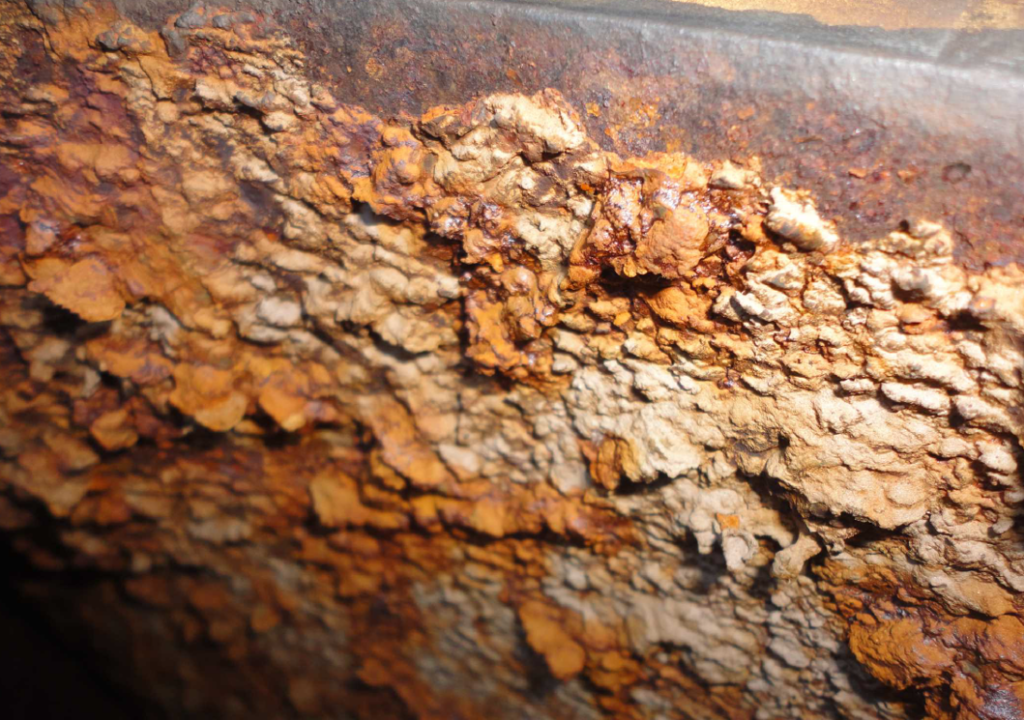
Cooling towers reject heat through the partial evaporation of circulating water. This evaporation rapidly concentrates the chemical species naturally dissolved in the water. Scale Formation The principal scale found in cooling towers is calcium carbonate, which forms from the decomposition of calcium bicarbonate. Other deposits may contain magnesium-, sodium-, or silica-bearing compounds. Their solubility depends

Cooling Tower Blowdown Systems Read More »

Chemical Corrosion Damage in Adiabatic Expansions

Chemical Corrosion Damage in Adiabatic Expansions

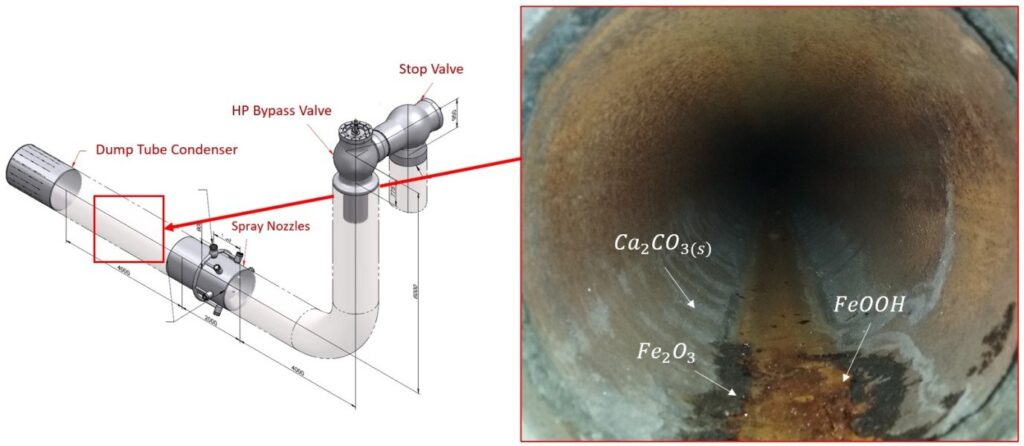
A sudden change in a flow passage—typically an increase in cross-sectional area—can cause water pressure to fall rapidly below the saturation pressure at its temperature, producing instantaneous vaporization. Expansion and Flashing Because the process is approximately adiabatic, there is no external heat exchange and total enthalpy remains essentially constant. Part of the liquid flashes into

Chemical Corrosion Damage in Adiabatic Expansions Read More »

Scroll to Top